一. Three Types of Solar Systems at a Glance
The table below provides a clear comparison of the key differences between on-grid, off-grid, and hybrid systems for a quick overview.
| On-Grid System | Off-Grid System | Hybrid System |
Grid Connection | Must be connected to the grid | Completely independent, no grid connection | Connected to the grid, can operate independently during outages |
Battery Requirement | Batteries are usually optional | Large battery bank is mandatory | Battery storage is essential |
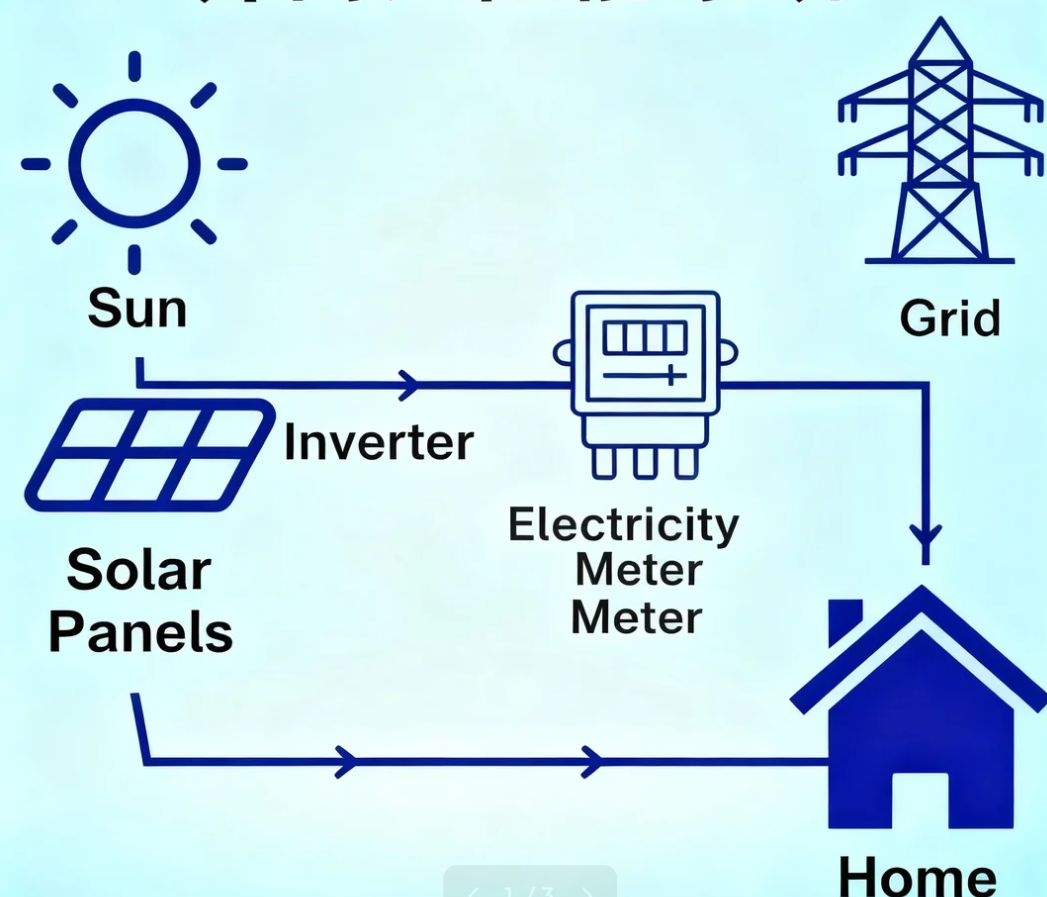
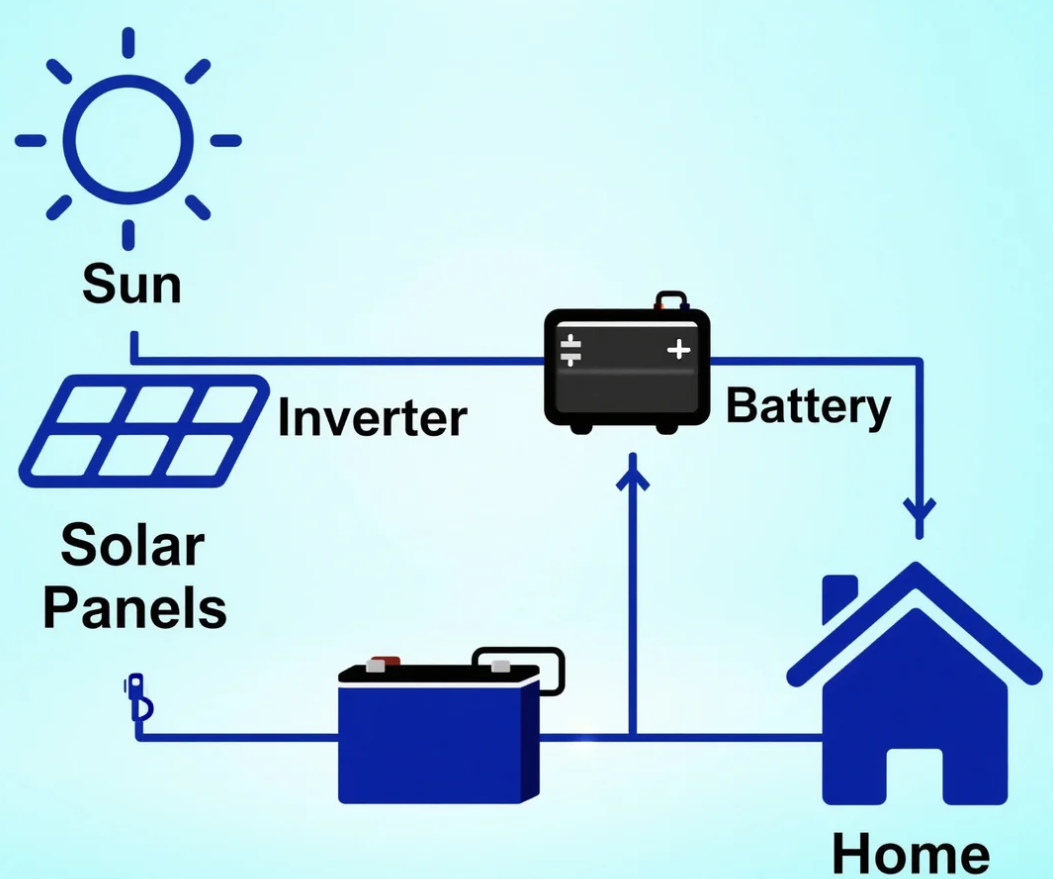
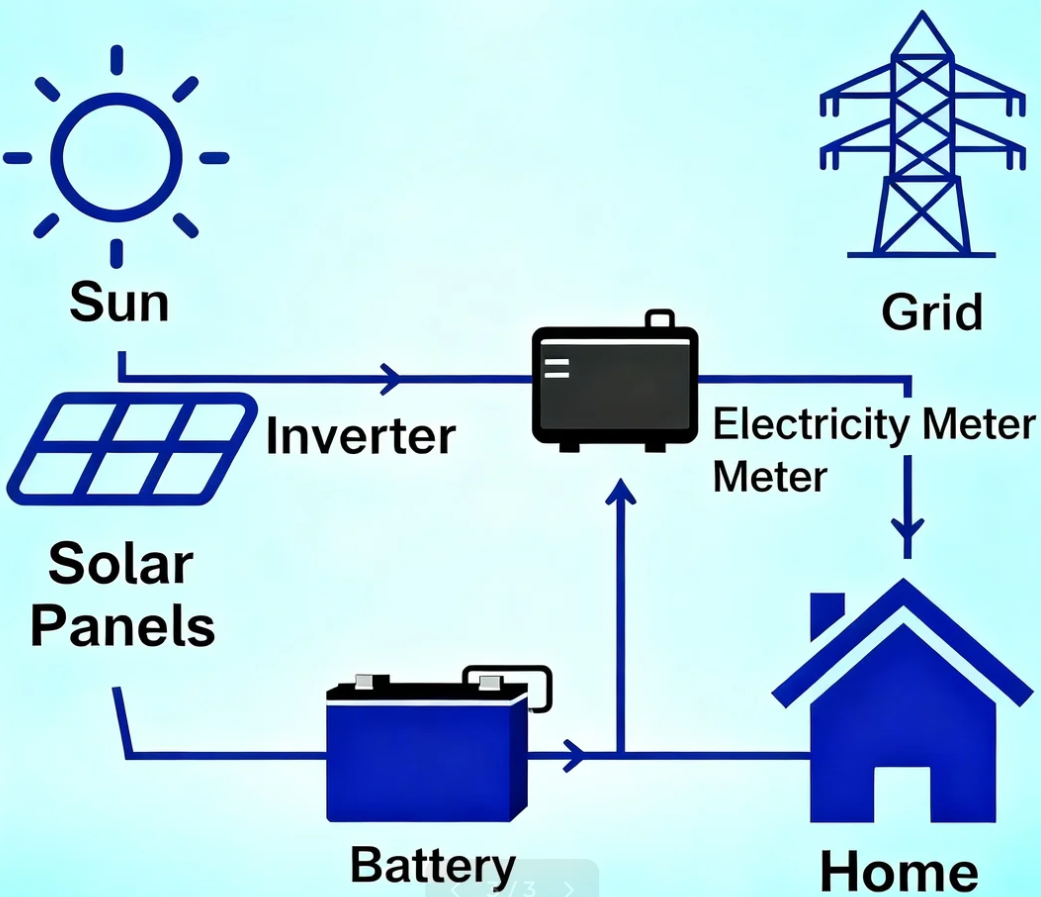
How It Works | Solar power is used first, excess is sold to the grid, shortfall is bought from the grid | All solar power is stored in batteries; loads are powered solely by batteries | With grid: Solar powers home/stores/sells; Without grid: Battery powers home |
Ideal For | Urban & suburban areas with stable grids | Remote locations with no grid access | Areas with frequent power outages, critical need sites |
Installation Cost | Lower | Higher | Highest |
Long-term Cost | Low (potential income from selling power) | High (battery replacement & potential fuel costs) | Medium (saves on bills, but has maintenance costs) |
二. Finding Your Ideal Match
1. On-Grid Systems: The Cost-Effective Choice for Urban Users
On-grid systems are the most common choice, directly connected to the public electricity grid.
Pros:
✅ Saves Money: No need to buy batteries, resulting in lower installation costs.
✅ Low Maintenance: Relies on a stable grid, making it simple to maintain.
✅ Can Earn Money: Excess electricity can be sold back to the grid.
Cons:
❌ No Power During Outages: The solar system shuts down when the grid is down for safety.
❌ Affected by Policies: Requires utility approval, and electricity buy-back rates can change.
Who Is It For?
Homeowners and businesses in areas with a stable grid, whose primary goal is to reduce electricity bills without a critical need for backup power.
2. Off-Grid Systems: The Complete Energy Independence Solution
Off-grid systems are self-sustaining and are the ideal solution for locations without access to the public grid.
Pros:
✅ Completely Grid-Independent: Provides power as long as there is sunlight.
✅ Power Self-Sufficiency: Can be paired with a generator for backup during long cloudy periods.
Cons:
❌ High Cost: Batteries are expensive and typically need replacement every 5-8 years.
❌ Unstable Supply: Power may be unavailable during extended periods of bad weather.
Who Is It For?
Farms, cabins, and workstations in remote areas, or any location where grid connection is impossible or connection costs are prohibitively high.
3.Hybrid Systems: The Best of Both Worlds for Reliability and Savings
Hybrid systems combine the benefits of both on-grid and off-grid systems, offering a versatile solution.
Pros:
✅ Balances Economy & Backup: Saves on electricity bills normally and provides power during outages.
✅ Stable Power Supply: The battery can support basic electricity needs for 1-3 days.
Cons:
❌ High Installation Cost:
❌ Complex System: Requires higher expertise for installation.
Who Is It For?
Homeowners and businesses in areas with unreliable grids or frequent power cuts, and those who seek maximum energy security and control even when the grid is available.
三. Find Your Perfect Solar Solution in 3 Steps
Answer the following three key questions to quickly identify the right system for your needs.
Question 1: How reliable is your local power grid?
Stable (Yearly power cuts ≤ 5 times, restored within ≤ 2 hours) → Prioritize an On-Grid System.
Unstable (Yearly power cuts ≥ 10 times, or single outages last ≥ 6 hours) → Focus on a Hybrid System.
No grid access (Cannot connect to the public grid) → Choose an Off-Grid System.
Question 2: What is your primary goal?
Saving money, reducing electricity bills → On-Grid System (Lowest cost, potential earnings).
Backup power for key devices during outages → Hybrid System (Works when the grid is down).
Basic electricity in areas without a grid → Off-Grid System (The only choice).
Question 3: What is your budget?
Budget ≤ ¥30,000 → On-Grid System (e.g., ~5kW system, enough for an average home).
Budget ¥30,000 - ¥50,000 → Hybrid System (e.g., 3-5kW solar + 20-30kWh battery).
Budget ≥ ¥50,000 (and no grid) → Off-Grid System (Includes solar, large battery, backup generator).